
Blog

  • Kids Indoor Slippers

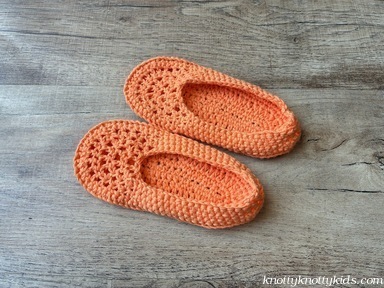
    Kids Indoor Slippers

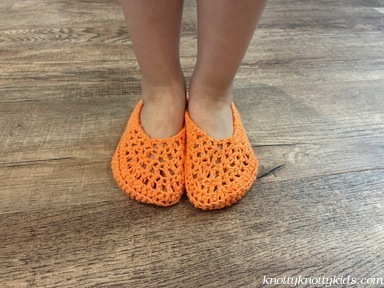
    I needed some bright orange yarn to make a BB-8 beanie. After shopping around for a while, the most economical option I found was to buy a 14oz roll. So there I was, one beanie later, trying to figure out what to do with a big roll of 100% cotton orange yarn. 

    Summer travels were coming up, and the kids needed new indoor slippers. The plastic ones they wore took up too much luggage space. Why not make some? 

    There are numerous tutorials online for indoor slippers, mostly sized for adults. It took me quite a bit of trial-and-error to figure out the perfect proportions for my kids’ feet. I ripped my first two slippers– one was altogether too large, and the other was the right length but much too wide. Honestly, everyone’s feet can be a little different, and kids’ feet are growing and changing all the time. So don’t be afraid to make adjustments. Just remember to write down what you did, so that you’ll know how to make a second one to complete the pair! 

    The following pattern makes a slipper that measures 7” long, 3-1/4″ wide. To create a longer slipper with the same width, add chains in the Setup step. To size up the slipper equally in width and length, add rounds in the sole after Round 5. A SC round adds about 1/2″ to the overall length and width, and a DC round adds about 1” to the overall length and width. 

    To maximize ventilation for those busy little feet, I use the technique of “chain one, skip one stitch” to create “open” stitches. In the front area above the toes, I do the “skip one stitch” without the “chain one”, which makes elegant holes while doubling up as stitch decreases. 

    Abbreviations

    – Ch = chain

    – SC = single crochet

    – HDC = half-double crochet

    – DC = double crochet

    – St(s) = stitch(es)

    – Sl st = slip stitch

    Part I: Sole

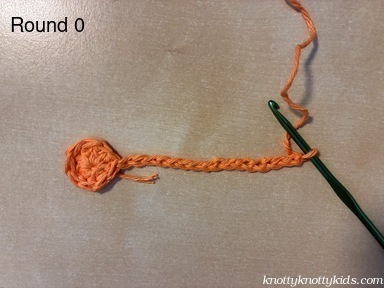
    Setup (Round 0): Magic circle with CH 2, HDC, 6DC, HDC, sl st to join. CH 16. 

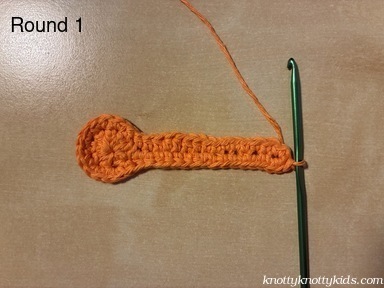
    Round 1: SC and HDC all around. 

    – 2SC in the second CH from the hook; SC for 7 sts; HDC for 7 sts. 

    – Magic circle: HDC in the first st (above the first magic circle HDC); 2SC in the next 6 sts (above each magic circle DC); HDC in the last st (above the last magic circle HDC). 

    – Going back on the bottom side of the chain, HDC for 7 sts; SC for 7 sts; 2SC in the same st as the first 2SC; sl st to join. 

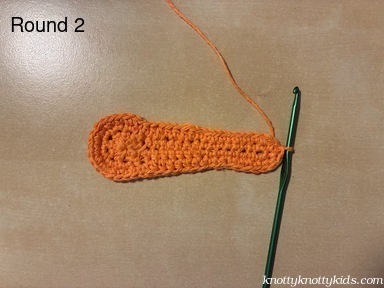
    Round 2: SC and HDC all around. 

    – CH 1; SC in the same st as the CH; 2SC in the next st. SC for 8 sts; HDC for 7 sts.

    – Magic circle: SC. Repeat 5 times: 2SC, SC. SC in the last 3 st of the magic circle.

    – HDC for 7 sts; SC for 8 sts. 2SC for 2 sts. Sl st to join. 

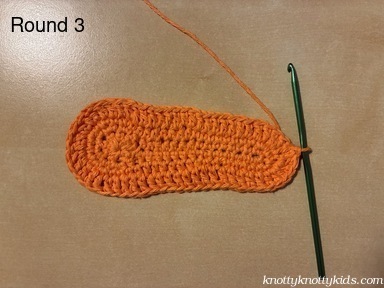
    Round 3: DC all around. 

    – CH 3; DC in the same st as the CH. 2DC for 2 sts. DC all around until 2 sts remain. 2DC for the last 2 sts. Sl st to join. 

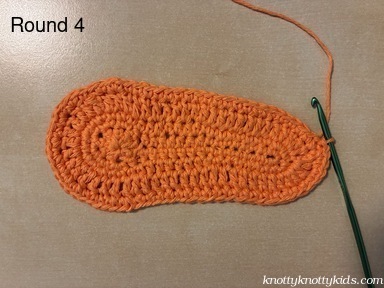
    Round 4: SC all around. 

    – CH 1; SC in the same st as the CH. SC 19 sts. 

    – Toes: Repeat 5 times: SC for 1 st, 2SC for 2 sts. 

    – SC 19 sts. 2SC in the last 2 sts. Sl st to join. 

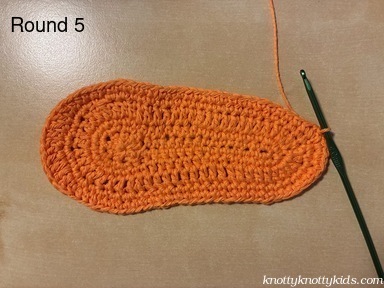
    Round 5: SC all around with HDC and DC toes. 

    – CH 1; SC in the same st as the CH. SC 24 sts. 

    – HDC for 4 sts; DC for 4 sts; 2DC for one st; DC for 4 sts; HDC for 4 sts. 

    – SC 25 sts. Repeat twice: 2SC for one st, SC for one st. Sl st to join. 

    Part II: Sides

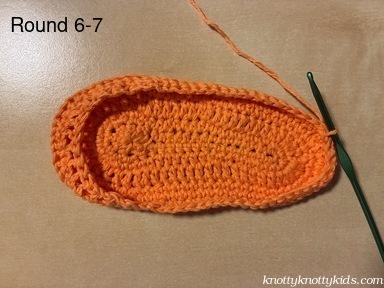
    Round 6: SC front loop. 

    – CH 1. SC all around, front loop only. 

    Round 7: Decrease shoe upper and heel.

    – CH 1. SC 17 sts. 

    – Repeat 2 times: CH 1, skip 1 st, SC in the next st.

    – Repeat 3 times: CH 1, skip 1 st, HDC in the next st.

    – Repeat 7 times: skip 1 st, DC in the next st. (This serves as a decrease. Do not CH in between.)

    – Repeat 3 times: skip 1 st, HDC in the next st, CH 1. 

    – Repeat 2 times: skip 1 st, SC in the next st, CH 1. 

    – Skip 1 st. SC for 17 sts. SC2TOG 4 times. Sl st to join. 

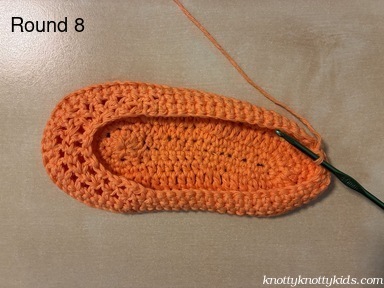
    Round 8: Continue shoe upper decrease.

    – CH 1. SC 17 sts. 

    – CH 1, skip 1 st, SC in the next st. 

    – Repeat 2 times: CH 1, skip 1 st, HDC in the next st. 

    – Repeat 5 times: skip 1 st, DC in the next st. 

    – Repeat 2 times: skip 1 st, HDC in the next st, CH 1. 

    – Skip 1 st, SC in the next st, CH 1. 

    – Skip 1 st. SC for 22 sts. Sl st to join. 

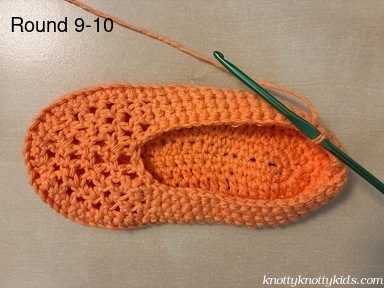
    Round 9: Continue shoe upper decrease. 

    – CH 1. SC 17 sts. 

    – Repeat 2 times: CH 1, skip 1 st, HDC in the next st. 

    – Repeat 3 times: skip 1 st, DC in the next st. 

    – Repeat 2 times: skip 1 st, HDC in the next st, CH 1. 

    – Skip 1 st. SC for x sts. Sl st to join. 

    Round 10: Slip stitch opening rim and heel loop. 

    – Slip 17 sts. 

    – Repeat 3 times: Skip 1 st, DC in the next st. 

    – Slip 19 sts. SC in the next st, CH 5, skip 2 sts, SC in the next st. Slip 2 sts. Sl st to join. Tie off.

  • A Beanie for Grandpa

    A Beanie for Grandpa

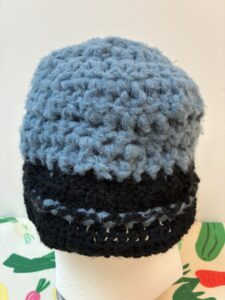
    Having just finished his first knitted scarf for the cold Canadian spring, we decided to make a crochet beanie for Grandpa. This was his first major crochet project. As a seven-year-old who wasn’t very detail-oriented, he found the counting for increases rather challenging, so I did the magic ring and the increase rounds. From there, he happily completed all the portions with one double crochet per stitch. 

    We ran out of bulky (#6) blue yarn halfway, so we continued with some #4 black yarn that we had on hand. To make the transition less awkward and look more like a part of the design, I left enough #6 yarn to make a #6 border in the #4 section. The ratio of “two #4 stitches per one #6 stitch” made the perfect transition. 

    Grandpa loved the beanie! He put it on immediately and wore it every day during our visit. 

    How to: Switch to a different yarn when starting a new round

    “11 more days until we go to Canada!” My oldest child announced, for the third time, one morning. He has been counting down for weeks now. We rarely travel as a family, so every trip is a huge excitement for him (and of course, a huge undertaking for us parents).

    – Pull a loop of the new yarn into the slip stitch that closed the previous round. Tighten the slip stitch of the old yarn. Now you are ready to start the new round! 

    – After finishing the round, weave in the loose end of the new yarn. 

    – If you plan to switch back to the old yarn soon, do not cut it. Instead, pull it to its new location, securing it by making chain stitches under the back side of the rows in between. 

    Materials

    – Super bulky (#6) acrylic yarn, blue (we used Lion Brand Yarn Feels Like Butta Thick & Quick Super Bulky Yarn for Knitting, Orion Blue)

    – Medium weight (#4) acrylic yarn, black (we used Red Heart Super Saver Yarn 312 Black)

    – 9.0mm crochet hook (for the #6 yarn)

    – 4.5mm crochet hook (for the #4 yarn)

    Abbreviations

    – CH = Chain

    – SC = Single crochet

    – DC = Double crochet

    – DC2TOG = Double crochet 2 stitches together (double crochet decrease; see tutorial here)

    – St(s) = Stitch(es)

    – Sl st = slip stitch

    Instructions

    – Round 1: Begin with #6 yarn. Magic circle with CH 3 and 10DC. [10 sts]

    – Round 2: CH 3. Increase every st, i.e., 2DC per st. Sl st to join. [20 sts]

    – Round 3. CH 3. Increase every 2 sts, i.e., alternate DC and 2DC. Sl st to join. [30 sts]

    – Round 4: CH 3. Increase every 3 sts, i.e., repeat 1DC-1DC-2DC. Sl st to join. [40 sts]

    – Rounds 5-7: For the next 3 rounds, CH 3; 1 DC per st all around; sl st to join.

    – Round 8: Switch to #4 yarn. Do not cut the #6 yarn. CH 3; make 2DC of #4 yarn in every st of #6 yarn; sl st to join. 

    – Round 9: Continue using #4 yarn. CH 3; DC every st; sl st to join. 

    – Round 10: Switch to #6 yarn. Do not cut the #4 yarn. CH 3; DC2TOG every two sts of #4 yarn; sl st to join. 

    – Round 11: Switch to #4 yarn. CH 3; make 2DC of #4 yarn in every st of #6 yarn; sl st to join. 

    – Round 12 and onward: Continue making DC rounds with #4 yarn until the beanie reaches your desired length. Optionally, do a final round of all SC (starting with CH 1) or all sl st for a cleaner finished look. Sl st to join, tie off, and weave in the loose end with a crochet hook or tapestry needle.

  • Finger-Knitted Flowers

    Finger-Knitted Flowers

    While assisting my 5-year-old daughter in cleaning up her desk recently, I discovered a sizable stash of pink finger-knitted threads in the corner of a drawer. She proudly told me that she handmade those “necklaces” to give away as gifts.

    It was both an “Awww” and “Ummm” moment for me. Of course I did not have the heart to suggest throwing them away, but I knew that those were not very practical necklaces, and I’m not sure if she had so many friends to whom she could give them.

    Suddenly, I had an idea. “How about we make them into gifts for your teachers?” Teacher Appreciation Week was coming up, and she was also about to graduate from preschool. She had six teachers to use up the stash.

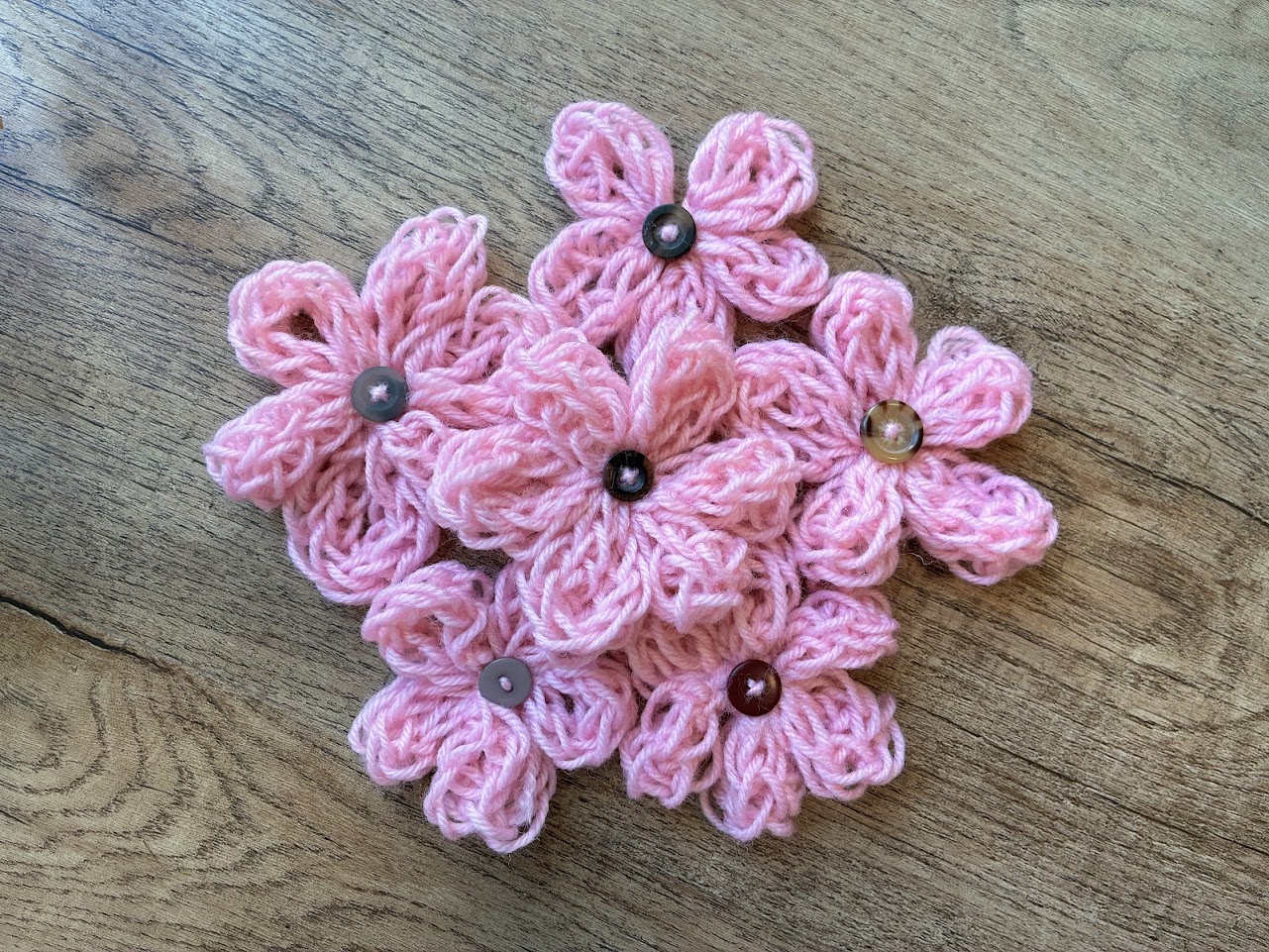
    After much head-scratching and web-searching on my end, I finally came up with a way to make these finger-knitted threads into something more useful: Flowers! With safety pins attached, these are great for wearing on clothes and bags, making them the perfect kid-made gift for Teacher Appreciation, Mother’s Day, and more.

    My daughter did the finger-knitting, but I did all the flower-making part as it was a bit more complicated. Nevertheless, my daughter was excited to see her finger-knitted work transformed, and even happier to see her caring, encouraging teachers put them on immediately upon receiving them!

    And as for me– I’m grateful to have reclaimed that corner of her desk drawer.

    Finger-Knitted Flowers

    Materials:

    • #4 acrylic yarn, pink (or color of your choice)
    • Button
    • Safety pin
    • Wire needle threader or hot glue gun (for attaching button to yarn)
    • Crochet hook or tapestry needle (for weaving in the ends)
    • Scissors

    Instructions:

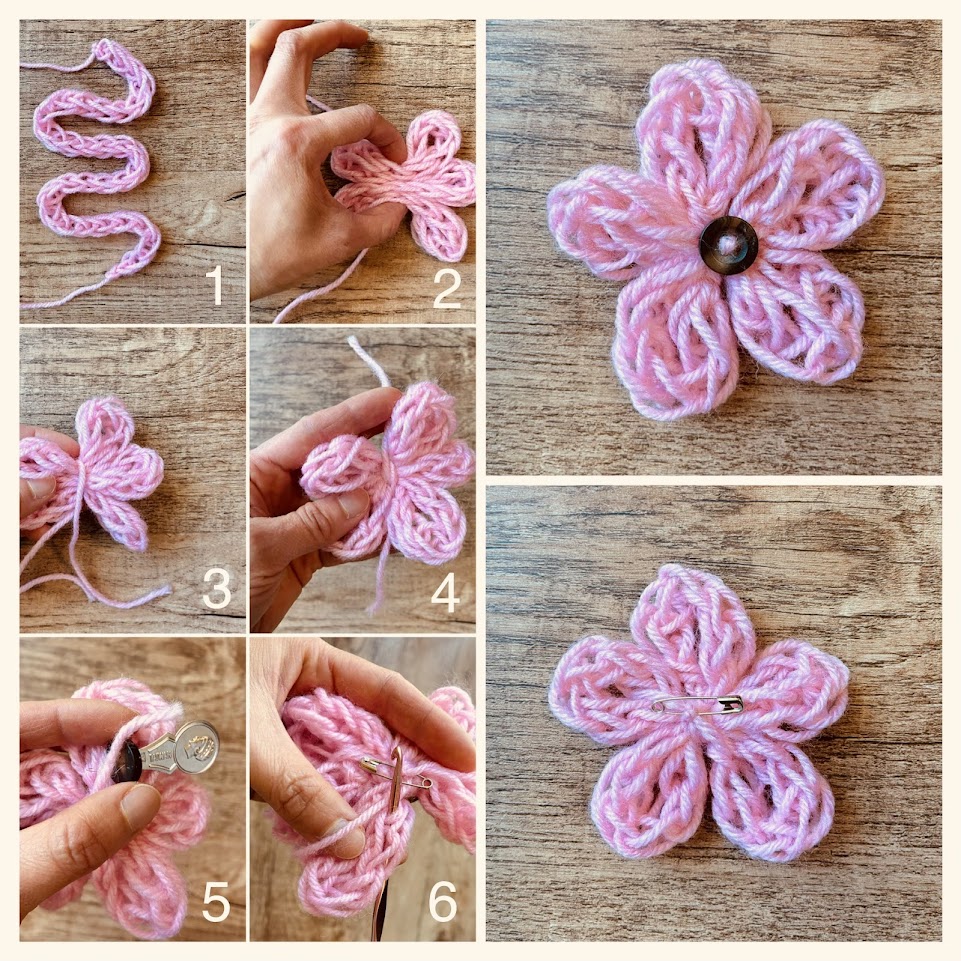
    Step 1: Finger knit. With 4 fingers, finger-knit a long thread of desired length, roughly 36 inches for a flower with 5-6 petals. Leave at least 6 inches of loose yarn on both ends.

    Step 2: Prepare the flower (Figure 1). Arrange finger-knitted thread in an S-shape with 5-6 bends, with both ends aligned in the middle. Each bend will become a petal.

    Step 3: Secure the flower (Figures 2-4). With the thumb and index finger of your left hand, gather the ends and the middle of the bends. With your right hand, wrap one of the loose yarn tightly around the gathered middle for 2-3 times. Wrap the other loose yarn tightly in the opposite direction 2-3 times. (Figures 2-4)

    Step 4: Attach the button to the front (Figure 5). Tie a knot in the back. Using a wire needle threader, attach the button to the loose yarn and center it on the front of the flower. Wrap the loose yarn tails tightly another 1-2 times. (If using a hot glue gun, skip this step and just attach the button at the end.)

    Step 5: Attach the safety pin to the back. Thread the loose yarn tails through the safety pin, with the fixed (non-opening) side on the back of the flower. Tie a knot to secure the fixed (non-opening) arm of the safety pin to the back of the flower.

    Step 6: Hide loose ends (Figure 6). Using a crochet hook or tapestry needle, pull the loose ends one a Insert a crochet hook from the tip of a petal all the way through to the center of the flower. Pull the loose end inside the petal to hide it. Trim loose ends shorter if needed.

  • Friendship Coaster

    Friendship Coaster

    You may have heard of friendship bracelets. But have you heard of friendship coasters?

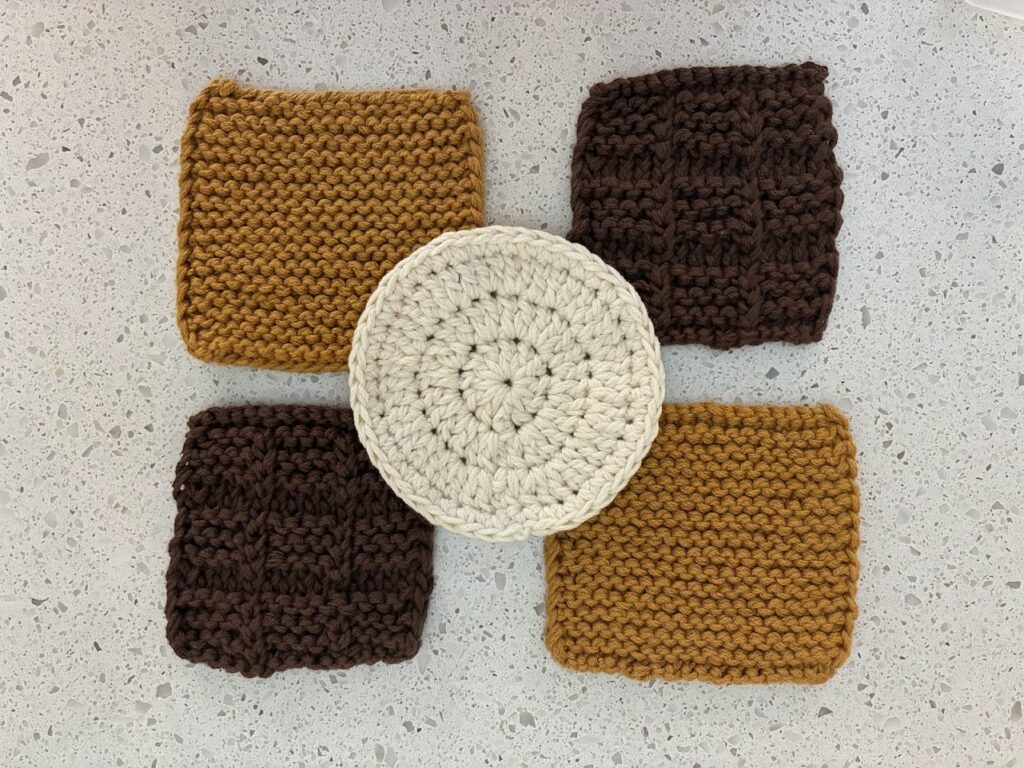
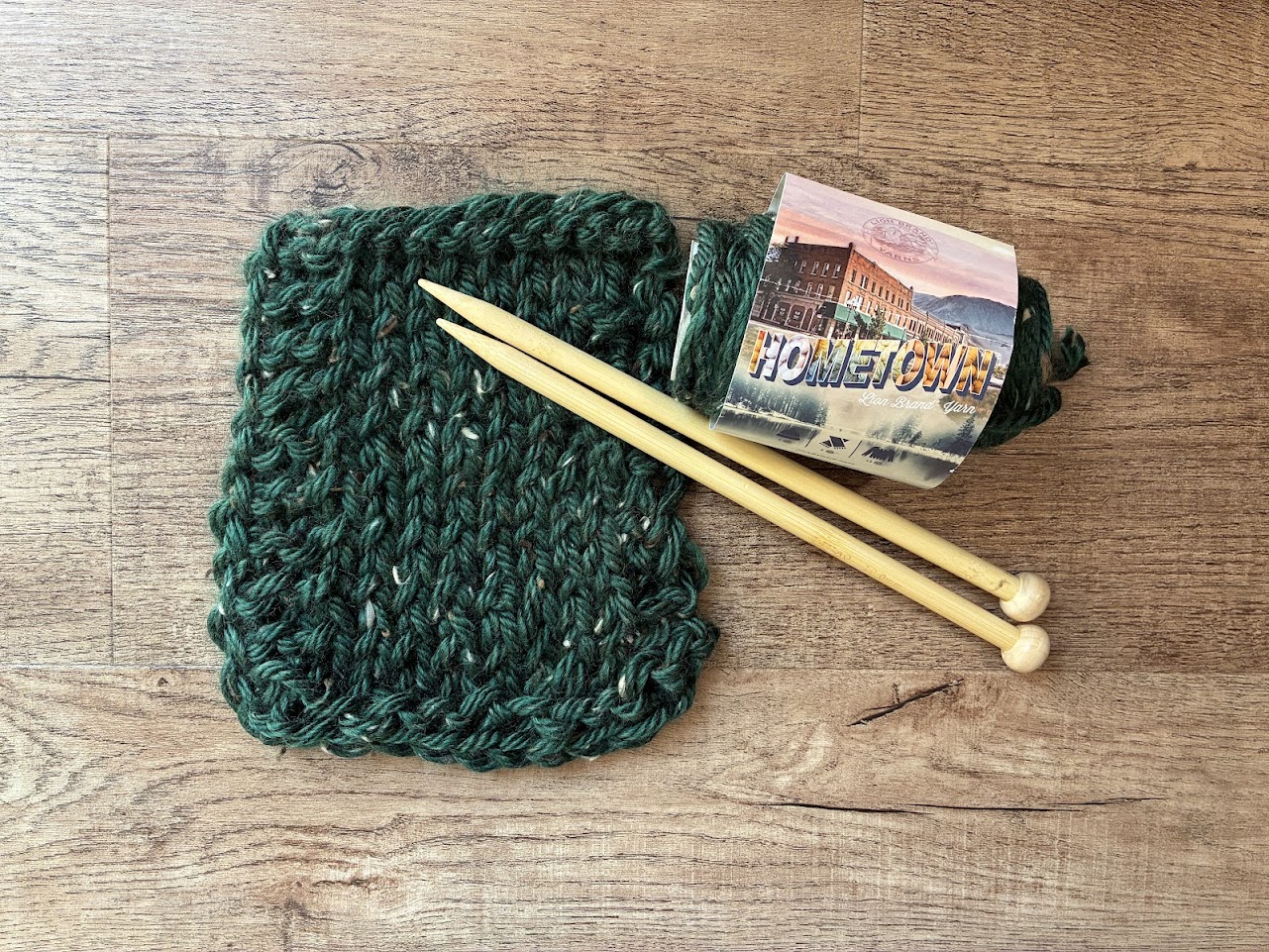
    My 7-year-old had to stay home for a few days to recover from a nasty cough and poor sleep. Missing his best friend, he decided to knit a coaster for him, in the same style as those we made for family over Christmas.

    This is a very beginner-friendly project that he is now able to complete independently, from start to finish. I handed him the yarn and needles, and he was done before I had a chance to take a picture of him knitting. Granted, it turned out much looser (and thus bigger) than the ones I did with him– more like a potholder– and had a gaping hole that I mended while weaving in the loose ends. Yet I am very proud and thankful for the progress that he has made, and especially for the fact that he wanted to spend time knitting for his friend.

    The construction is simple: it is a square stockinette piece, with two rows/stitches of garter borders to prevent curling. It can easily be scaled up to make a potholder, placemat, dish cloth, or hand towel.

    Materials

    • Super bulky (#6) acrylic yarn– we used Lion Hometown Riverdale Tweed
    • 10.0mm knitting needles

    Instructions

    The pattern consists of two types of rows:

    • Knit row: Knit all but the last stitch. Purl-wise slip the last stitch.
    • Purl row: Knit 2 stitches. Purl all but the last 2 stitches. Knit 1 stitch. Purl-wise slip the last stitch.

    Steps:

    1. Cast on 12 sts. (If the knitting is loose, decrease the number of stitches to desired size.)
    2. Make 2 Knit rows.
    3. Alternate Purl and Knit rows until the center (stockinette) part is a square, about 5-6 Purl-Knit sets.
    4. Make 1 Knit row. Only one row is needed here because we just finished with a knit row in the previous step.
    5. Cast off.
    6. Weave in the ends with a tapestry needle.
  • Teaching Young Kids to Knit

    Teaching Young Kids to Knit

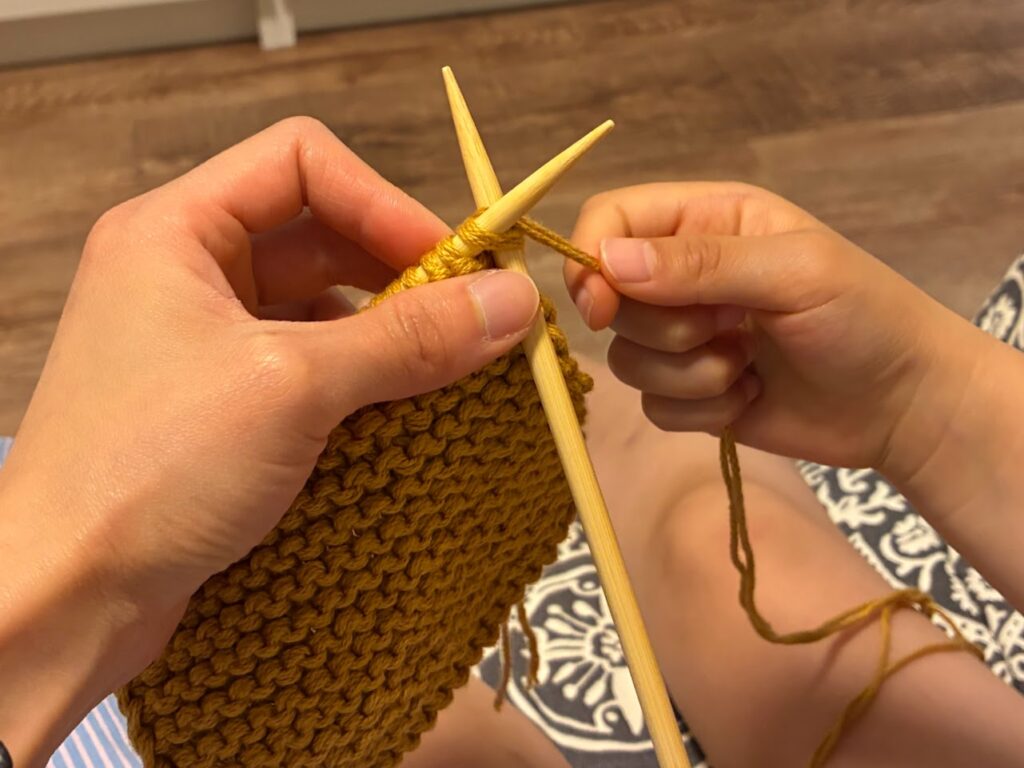
    When I learned to knit, I watched a lot of Youtube tutorials and started with casting on. However, when it came to teaching my 7- and 4-year-old, we took a different course. I wanted to avoid screentime, so we didn’t watch any tutorials. Here is my recommended approach based on our own experience. 

    1. Use medium-weight yarn

    A lot of tutorials for adults recommend bulky (#6) yarn and thick needles because the project comes together quickly. For kids, however, I have found that medium-weight (#4) yarn and 6-6.5mm needles are much easier for their little hands to work with. Circular needles are even better because they are shorter and less likely to be dropped. We also use 100% cotton yarn that is less likely to frizz or be poked through by the needle. 

    2. Start with the knit stitch, English style

    To give them a head start and help them stay engaged, do the casting on for them so they could jump right into the knit stitch. I prefer to teach the English style (in which the right hand holds and “throws” the working yarn) because it is easier for beginners. Have your child hold the working yarn and “be” your right hand, looping the yarn around the needle, while you do the rest. Once they mastered the looping, switch: have them hold the needles while you hold the working yarn. When they are familiar with where everything goes, they can be in full control of the yarn and needles while you supervise. 

    3. Optional: Purl stitch

    This step is optional; my 4-year-old was perfectly content to stick with the garter stitch (all knit stitch rows), but the 7-year-old wanted to learn the stockinette pattern. If so inclined, teach the purl stitch in a similar manner, letting them first be the working yarn, then be the needle, then everything together. 

    4. Optional: Purl-wise slip the last stitch of every row

    For most projects, we preferred the more elegant look of slip stitch edges. You can easily teach this to your child by explaining how to bring the yarn to the front before slipping. 

    5. Cast off their first project

    Once they reached the end of their first project, they were skilled enough to do the cast-off themselves. Since casting off is based on the knit stitch, it’s pretty straightforward. If your child is motivated, they might even be able to weave in the loose ends with a tapestry needle. There is nothing like finishing up your very first project! Give a hi-five and take lots of pictures!

    6. Cast on a new project

    Riding on that wave of excitement, your child may now be ready to tackle the cast-on and start a new project. I’ve found the “butterfly” (longtail) cast on to be easiest for my kids. Holding the yarn in your left hand, have the child hold the needle with you in your right hands. Guide their hand to pass the needle a couple of times, then have them try it themselves. Then have them do the left hand themselves while you supervise. 

    Your experience may vary. Feel free to follow your child’s lead— you know them best! 

    As with learning anything, there will be challenges. When we were just starting out, stitches frequently slid off the needles, and I hadn’t learned how to fix that, so we played “frog” a few times— “rip-it, rip-it”. Their work was far from perfect; the row widths were uneven, and there were some large holes. But to the kids, those craggy pieces of fabric they made with their own little hands were the most amazing creation ever.

    That said, I do think it was positive for their overall confidence and enjoyment for me to be more hands-on, especially with their first few projects. I would check on them every few rows, and if too many stitches were missing, I would do a few corrective rows myself so that the finished work maintained its overall shape. 

    I also learned to put in a “lifeline”, which was immensely helpful in avoiding a total rip-it. To do this, after finishing a row, use a tapestry needle to insert a short piece of different-colored yarn— the lifeline— exactly where the knitting needle is. If you ever need to backtrack, you can rip the work up to the lifeline, re-insert the needle, and restart from there. 

    Behind the scenes, I finished all the sewing parts of their projects, patching holes and hiding uneven edges while I was at it. Sometimes I added borders or embroidered their monogram to hide obvious blemishes. My goal was to make the final products presentable and beautiful, while maintaining the authenticity of the child’s work. They were always thrilled to get their finished project back! 

    And if they lose interest? It’s okay. Shelve it and try again later. To me, teaching my kids to knit is about doing something fun together. While I do have to nudge them on and help them sometimes, pushing too hard defeats the whole purpose. 

    Chances are, though, if they see you enjoy something, they would be more likely to be interested and end up enjoying it themselves. 

    Looking for ideas on what to make? Check out my list of beginner kid-friendly knitting projects!